All posts by Jen

Digital Education at Edinburgh: Spotlight issue of Techtrends

In late 2013 the Digital Education group was invited to produce a spotlight issue of the journal TechTrends. This has just been published! You can find it here:

http://link.springer.com/journal/11528/59/1/page/1

As Sian and I wrote in our editorial:

We were delighted to be invited to create a spotlight issue of TechTrends, bringing together research from the Digital Education research group at the University of Edinburgh, Scotland. This group includes members involved in the online Masters in Digital Education programme, MOOC developments at the University of Edinburgh, including the E-learning and Digital Cultures MOOC, authors of the Manifesto for Teaching Online, as well as our Children and Technology group, and Learning Analytics strand.

The group is diverse, and this diversity is reflected in the contents of this spotlight issue. From app design for children with autism, to how reflection is changing in information-dense environments, to students’ views of academic writing in the digital age, to patterns of participation in MOOCs, this spotlight issue is held together not by a single theme or a topic, but by a shared curiosity about what is happening to learning and education as more and more of our experiences are mediated by digital practices and technologies.

The other key thing that brings the articles in this issue together is this: the authors strongly believe that those of us who are immersed in and excited by the possibilities of technology and education are uniquely placed to ask critical questions about it. As knowledgeable insiders, we can and must examine our own and others’ practices, and challenge assumptions and oversimplifications about educational change in a digital age. These papers share this critical take, and aim to treat emerging technology trends as a generative site for asking big questions.

One key source of big questions is ‘big data’. In this issue, Hamish Macleod, Jeff Haywood, Amy Woodgate and Mubarak Alkhatnai examine some common assumptions made about MOOCs, and find these are not always backed up by participation data from the University of Edinburgh’s massive courses. Jeremy Knox experimented with sensors to explore the boundaries between the human and non-human in the production of data, with interesting implications for future directions for learning analytics. Dragan Gašević, with his co-authors Shane Dawson and George Siemens, challenge the educational usefulness of measurement and prediction of student outcomes through learning analytics, where these analytics are not well-grounded in educational theory and practice. And big data of a different kind – the digital artifacts we collect and learn with – is the focus of Tim Fawns’ exploration of how we engage with information online. He argues that the scale of these collections, and their importance in our lives, now require approaches which combine selectivity and digital creativity to make reflection central to our strategies for coping with information overload.

Another important dimension of learning and technology is how established practice and theory might be challenged and changed by the incursions of the digital. Philippa Sheail argues that the taken-for-granted concept of the ‘meeting’ undergoes some profound transformations when applied to different sorts of digital environments. Andrew Manches, Pauline Duncan, Lydia Plowman and Shari Sabeti take a close look at the development of children’s games to incorporate them into an emerging Internet of Things (IoT). They examine how children engage with IoT-enabled toys linked to the popular games Skylanders and Disney Infinity, and reflect on the ethical and practical implications of changing children’s relationships with everyday things. Peter Evans’ research into professional learning in social media environments shows how these technologies challenge concepts of autonomy and learner control usually thought of as central to personalisation.

Finally, what is still emerging hasn’t yet become routine and invisible, and so can be particularly useful in defamiliarising our world as educators. Once things become ‘black-boxed’ (ref), they disappear from view, and examining new educational technologies, concepts and practices can sometimes crack that box open, letting us make the familiar productively strange. Christine Sinclair takes student perspectives on academic writing as a starting point for exploring the changes which might be coming in scholarship and rethinking the idea of ‘dialogue’ for a digital context. Sue Fletcher-Watson provides an analysis of the development of mobile applications for children with autism, questioning traditional relationships between researchers and developers in the process. She proposes ways for academic researchers, families and consumers, and commercial developers to work together to ensure that both the evaluation and development of these emerging technologies make use of the best available evidence.

As we have engaged as editors with the papers in this spotlight issue, we have come to feel that the different topics, approaches and concerns of our colleagues accurately reflect the richness and diversity of the field of digital education itself. Psychology, cultural studies, literature, sociology and organisation studies are all in evidence as disciplinary perspectives here. We hope that you will find, as we have, that this bringing together of perspectives is invigorating and inspiring, and offers you some fresh insights into your own matters of concern.

‘Engaging with “webness” in online reflective writing practices’: New paper available open access until 1 December

My latest paper, just published in Computers & Composition, has been made available by the publishers on an open-access basis until 1 December 2014, using the link below.

Ross, J. (2014). Engaging with “webness” in online reflective writing practices. Computers and Composition, 34, 96-109. http://authors.elsevier.com/a/1PvdMV6mkzOlZu

The article argues that online reflective practices in higher education produce tensions around ownership, control, and safety. Reflective writing pedagogies, commonly grounded in a humanist philosophical tradition, often value coherence and authenticity. Writing online, however, opens students and teachers to the sorts of questions and uncertainties about subjectivity, ownership of data, privacy, and disclosure that characterize the online context. This is the case no matter how much teachers try to protect students or deny the “webness” of their reflective practices. The article draws on qualitative data from interviews with students and teachers in higher education in the United Kingdom. It argues that engaging with digital traces calls for a different approach to reflection, and proposes the “placeholder” as a way to privilege fragments, speed, and remixability in a reflective writing context.


My time in the Scottish Parliament

This year I was delighted to have been appointed a Scottish Parliament Fellow by the Beltane Public Engagement Network. This meant I got to spend a day a week in the Scottish Parliament over a roughly six-month period.

I really can’t say enough good things about my experience as a Fellow, working closely with Donald Jarvie and Scotland’s Futures Forum. My understanding of public engagement, the policy sphere in Scotland, and the value of networking and collaborating beyond academia has been deepened, and it’s really had a big impact on how I think about my identity and priorities as an academic.

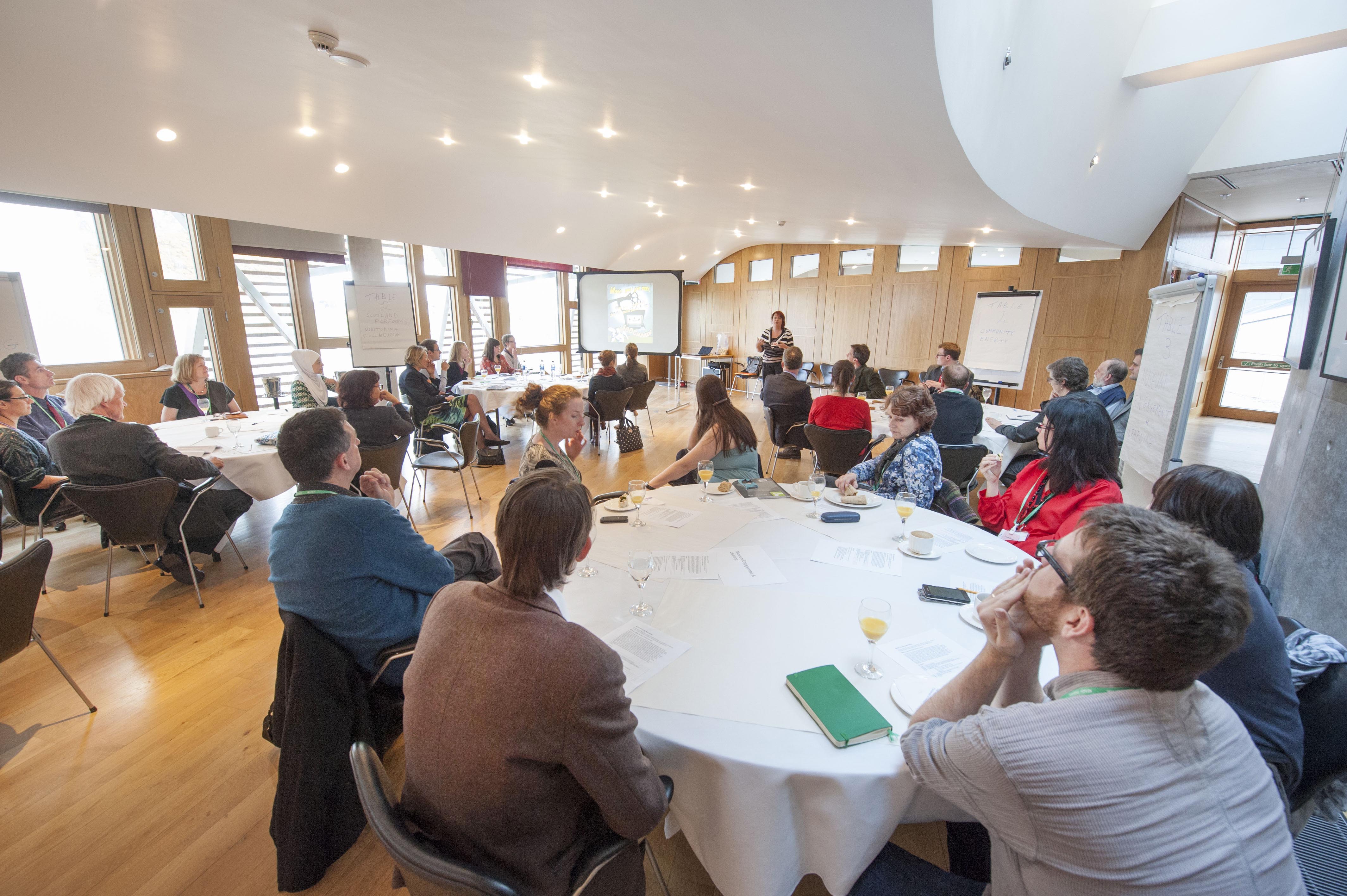
My Fellowship focused on online and distance learning in Scotland, and looked in particular at issues around Massive Online Open Courses. I briefed Parliament colleagues about MOOCs, co-ordinated resources and activities to get them to explore these courses by signing up for one in early 2014, and worked with the Forum and the Learning and Leadership team to embed MOOCs as part of the professional development infrastructure of the Parliament. The MOOC strand culminated in a workshop in April 2014, bringing together groups of non-academic experts in four topic areas, including wellbeing and community energy, along with MOOC experts from the University of Edinburgh, to discuss the potential for creating MOOCs for public engagement and knowledge exchange. These teams are now taking their ideas forward, with further input from me.

_DRP5238
MOOC scoping workshop, 7 May 2014, Scottish Parliament


Two other strands of activity emerged during the Fellowship. The first involved discussions with the Shetland Learning Partnership, when Scotland’s Futures Forum was asked to help plan scenarios for secondary, further, higher and adult education in Shetland.

One of the sights of Shetland - in the taxi, stopped at the runway's level crossing to wait for a plane to take off!
One of the sights of Shetland – in the taxi, stopped at the runway’s level crossing to wait for a plane to take off!


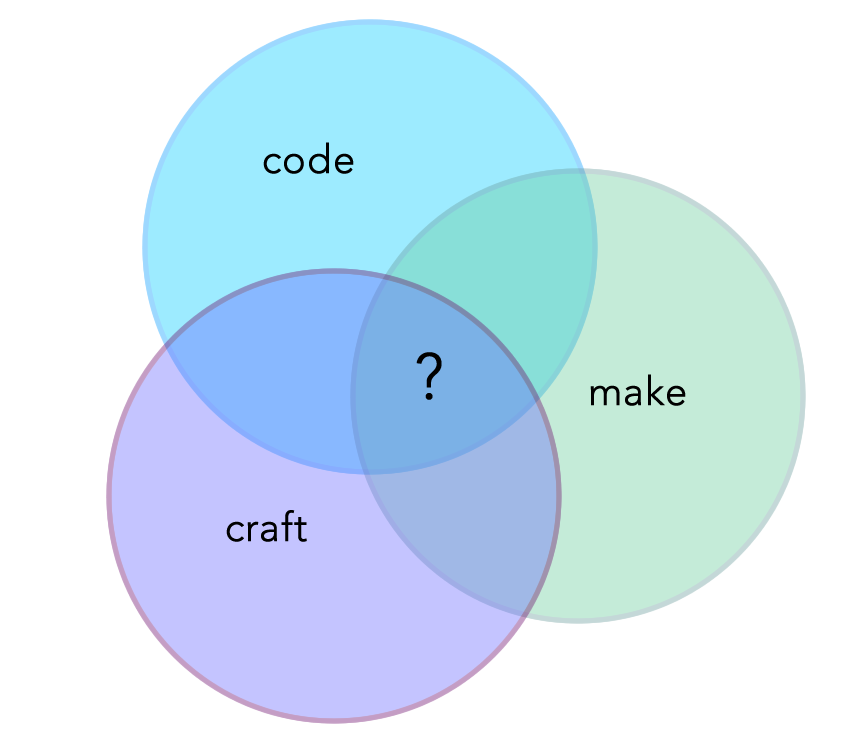
The second was a collaboration with the Forum to host a ‘Creative Futures for Scotland’ roundtable event exploring how the growing popularity of individual and collaborative creativity (for example, crafting, 3D printing and web coding) could impact on learning, innovation and wellbeing in Scotland.

making coding crafting
My question about Scotland’s creative futures.


All three areas of work are continuing beyond the end of the Fellowship. I greatly appreciate the support I’ve received from Beltane, Scotland’s Futures Forum and the University of Edinburgh.

Networked Learning & Emerging Technologies for Online Learning – an eventful week

Next week I’m fortunate to be involved with two digital education conferences, and wanted to post about them both, because they’re both very dear to me.

From Monday 7th, my colleagues and I are proud to be the local hosts of the Networked Learning conference in Edinburgh. This is, in my opinion, the best conference for hearing about new approaches to networked/digital/online education theory. This year the keynotes (from Neil Selwyn and Steve Fuller), symposia, and papers look outstanding. I’m missing my own symposium on Wednesday, on ‘the spaces of networked learning‘ which is upsetting, because it’s going to be amazing. But Phil Sheail, my paper co-author, is planning an excellent short talk based on our paper: Disrupting the illusion of sameness: the importance of making place visible in online learning.

The reason I’m missing it is because I’m heading to Dallas, USA, for my third year of Sloan-C’s Emerging Technologies for Online Learning. I have this conference to thank for introducing me to some wonderful collaborators, including Amy Collier, with whom I’m giving a plenary talk on Friday morning: Mess in Online Education – How it is, how it should be. I’m also getting the opportunity to think about my career (!), as I join a panel discussion about ‘the role of faculty and professors in educational technology’.

So – an eventful week, the end of which will find me with my dear sister, the other Dr Ross, exploring the sights of DC. I’m promised cherry blossoms.

If we’re overlapping next week in Edinburgh or Dallas, I look forward to seeing you!

http://upload.wikimedia.org/wikipedia/commons/3/3c/Newark_cherry_blossoms.jpg

HEA report: the pedagogy of the MOOC

Last autumn, Sian and I were commissioned by the  Higher Education Academy in the UK to write a report about MOOC pedagogy. The report has been published today, and is available to download.

The report details the UK MOOC landscape, and shares findings from interviews with MOOC teachers.

The three key concluding messages the report emphasises are:

  1. MOOCs are multiple: we can no longer define them either as a single ‘transformative’ entity or clearly position them in terms of the previously dominant cMOOC/xMOOC binary.
  2. MOOC pedagogy is not embedded in MOOC platform, but is negotiated and emergent, a sociomaterial and discipline-informed issue.
  3. The teacher persists in the MOOC: though reworked and disaggregated, the teaching function and teacherly professionalism remain central.